Portfolio · Oakland, California · Updated 21 November 2026

Jeremiah Harrell

AI systems engineer · Full-stack developer · Senior business intelligence & data engineer

[email protected] Founder, BI Tech Services github.com/Analytics206

Twenty-six years of turning data into decisions, and since 2025 into working AI systems. I spent thirteen years at T-Mobile as the sole developer of its credit-risk data warehouse, built the company's first OLAP solution and its first enterprise sales dashboard, consulted inside Microsoft on full-stack SQL Server BI with automated data-quality monitoring, and then founded BI Tech Services.

Today I design and build complete AI-powered systems: agent orchestration platforms, retrieval-augmented generation services, real-time voice assistants, live multi-model LLM benchmarks, multiplayer 3D browser games, multi-tenant analytics SaaS and connected devices, all self-hosted on Docker behind Cloudflare. The BI foundation shows in how I work: retrieval chosen by benchmark, forecasts backtested, dashboards reconciled to zero differences. The architecture of everything here is mine; AI coding agents speed up the implementation, inside guardrails I designed.

26years in data, BI and software, 2000 – 2026
31repositories with commits, Mar – Sep 2026
1,393commits over 81 active days
11live public products, self-hosted
9,800+automated tests across projects

Career

2000 – present

Thirteen years building T-Mobile's credit-risk warehouse and enterprise reporting, consulting inside Microsoft, a year of game programming, construction analytics, and since 2020 my own consultancy, where the work moved from BI into AI systems.

Roles, 2000 – 2026

Each bar is one role. Hover or focus a bar for detail; the full list follows.

T-Mobile 2000 – 2013Programmer Analyst → BI Developer IV

Credit-risk data warehouse, first OLAP (2002), first enterprise sales dashboard

Microsoft 2014 – 2016Senior BI Consultant

Full-stack SQL Server BI, telemetry data-quality monitoring

Gamma Games 2016 – 2017Gameplay Programmer

Unity C#: game AI, procedural terrain, UI

T-Mobile 2017 – 2018Senior Analyst

Anomaly detection and reporting in R, Python, Qlik, Netezza

XL Construction 2018 – 2020System Analyst

Project status reporting, payroll migration, Tableau and Power BI

BI Tech Services 2020 – nowFounder and Principal Engineer

BI and data engineering consulting; AI systems and eleven live products since 2025

Years as listed on the resume. Promotions at T-Mobile: Programmer Analyst, Developer II, BI Developer III, BI Developer IV.

2002Built T-Mobile's first OLAP (SSAS) solution for enterprise reporting
10×faster report queries after moving stored-procedure reports to cubes
13 yrs24/7 on-call for production SQL Server, SSAS and IIS at T-Mobile
250+annual HR employee reviews automated at XL Construction
2020 – presentOakland, CAbi-tech-services.com

Founder and Principal Engineer

BI Tech Services: business intelligence, data engineering and, since 2025, AI systems

  • Designed and launched PatronMetrics, a multi-tenant revenue-analytics SaaS for Patreon creators: a star-schema warehouse per tenant, a 15-view SQL metric layer and configuration-driven dashboards. Matched all 69 legacy Power BI measures with zero failures, exposed a ~1.8× revenue overstatement in the old model, and cut change detection from 44 minutes to 2.2 seconds.
  • Data-governance tooling for a multi-location franchise business: an async Python CLI over the Integrate.io and dbt Cloud APIs that extracts pipeline and model metadata and generates lineage and inventory documentation.
  • Built Harness, an AI agent orchestration platform (~33K lines of Python, ~3,500 tests) that runs Claude and Codex coding agents through YAML workflows with reviewer agents, validation gates and cost caps, then used it to deliver the products on this page.
  • Shipped and operate eleven live products on self-hosted Docker infrastructure behind Cloudflare Tunnel, with Prometheus/Grafana SLO dashboards, automated backups and CI. The newest are the Robot Toes & Friends Flexi Maker, where people design 3D-printable figures and download print-ready files; Katie Kicks, a rhythm game coming to Steam; and ZOMTOONS, an online co-op 3D game.
  • Voice and edge AI: a self-hosted voice platform for an ESP32-P4 device with zero-trust pairing (0.38–0.56 s to first audio), and a fully local multi-character AI co-host for live streams.
  • Earlier engagements (2020–2025): reporting, ETL automation and process automation for construction-industry clients, including Tableau and Power BI development and consolidated project reporting from Viewpoint and Procore.
2018 – 2020

System Analyst

XL Construction

  • Built the company-wide Project Status Report, consolidating every construction project from Viewpoint, Procore and other sources.
  • Migrated all data from the legacy payroll system to its replacement.
  • Automated 250+ annual employee reviews that HR had produced by hand; delivered general-ledger budget reporting by department in Tableau.
  • Reporting, ETL automation, infrastructure gap-fill development, Power BI, ad hoc analysis and custom development.
2017 – 2018

Senior Analyst

T-Mobile

  • Reporting, anomaly detection and ad hoc analysis using R, Python, Qlik, Netezza, Azure SQL and Power BI.
2016 – 2017

Gameplay Programmer

Gamma Games (startup)

  • Unity C# development: level design, particle systems, scene construction, lighting optimization, game AI, scriptable objects, JSON data, procedural terrain and UI.
2014 – 2016

Senior BI Consultant

Microsoft (consulting engagement)

  • Full-stack agile BI on SQL Server (database engine, SSIS, SSAS, SSRS) and Power BI: user stories into action items, TDM/LDM/PDM models for ETL, data marts and tabular cubes, dashboards and scorecards.
  • Patch compliance: gave program management visibility into "Patch Tuesday" server-compliance rates with an automated full-stack BI solution.
  • Telemetry warehouse quality: real-time monitoring that finds data gaps and alerts on quality issues before consumers notice — customer communication rather than customer notification.
  • Data latency: ETL-duration monitoring with alerts and live Power BI reporting, plus automated reprocessing whenever source, warehouse and cubes disagreed.
  • Table-driven monitoring metadata that program managers maintain without code changes; a TFS API data mart for sprint analytics; mentoring on query-performance monitoring.
2000 – 2013

Business Intelligence Developer IV

T-Mobile

Promoted from Programmer Analyst to Developer II, BI Developer III and BI Developer IV.

  • Sole developer of the credit-risk data warehouse, OLAP cubes and dashboards used enterprise-wide for application, activation, deactivation, payment and write-off reporting; data extraction, cleansing and merging for the credit-risk modelling team.
  • First OLAP solution at T-Mobile (SSAS, 2002); migrating stored-procedure reports to cubes improved query times 10×.
  • First enterprise sales dashboard: activations with time-series run-rate charts and drill-through from executive to dealer level, used by executives and the whole sales team.
  • Self-service reporting: a web-based drag-and-drop pivot tool (ASP.NET, Office Web Components, OLAP) that let analysts with little SQL create, save, share and export reports to Excel.
  • Customer Overage alerts: monitoring that warned new subprime customers likely to churn from overage charges, reducing deactivations and write-offs; analysis behind policy changes that raised ARPU in the subprime segment.
  • An Analytic Data File with universal business rules that unified statistical modelling; automated transformations with SLAs; 24/7 production on-call, disaster recovery and migrations; mentoring in SQL and query performance.

Education

University of WashingtonPhilosophy · 1999 – 2000

Left to support family. The interest resurfaced in Gnophy, an AI philosophy tutor grounded in the philosophers' own texts.

Edmonds Community College1997 – 1999

Transferred to the University of Washington as a junior; worked in the Financial Aid Office processing applications and loans.

How I work

I use AI coding agents to speed up implementation. The architecture, the specifications and the guardrails are mine, and the git history shows the design work came first.

I own the architecture

Every system starts with requirements that carry IDs. A system design with decision records follows: the rationale and the alternatives I rejected. Then data models, API and protocol contracts, and threat models where they matter.

Agents build inside guardrails I design

Coding agents (Claude Code, OpenAI Codex) work to my specs under explicit rules. Hooks enforce those rules: they gate commits, scan for secrets and require validation before an agent can finish. Test suites, CI and independent reviewer agents back them up. I built Harness, my own orchestration platform, to run this loop.

Measure, then decide

I choose retrieval strategies by benchmark (MRR, recall@k) and backtest forecasts (MAPE). I profile and rewrite slow queries, and reconcile new dashboards line by line against the system they replace before trusting them. The habit comes from thirteen years of production BI.

Design first, on the record

ProjectDesign documentWrittenBuiltLead time
PatronMetricsProduct requirements (multi-tenant, SQL metric views)2026-01-162026-08-026.5 months
SugarPaws3DRequirements tracker with feature IDs cited in later commits2026-01-31Jul – Aug 20265–6 months
Voice assistantPRD phase 2: voice-to-agent handoff2026-07-052026-07-293.5 weeks
HarnessParallel-run scheduler design2026-07-072026-07-202 weeks
ESP32-P4 CompanionArchitecture, device protocol, threat model, abilities spec2026-08-072026-08-07 – 08-09Hours to 2 days
SugarClawBRD, PRD, architecture and decision log2026-08-17 13:022026-08-17 20:137 hours
OKF MeshNormative spec and first architecture decision records2026-08-01 12:572026-08-01 14:472 hours

First-commit dates from each repository's git history.

Live products

11 live

Each one is self-hosted on Docker and published through Cloudflare Tunnel, with no inbound ports. Screenshots taken 7 October 2026 to 21 November 2026.

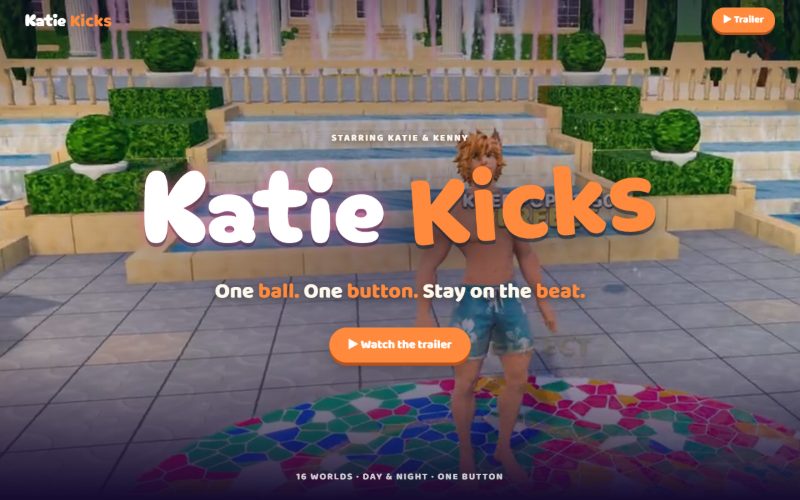
Katie Kicks trailer page: the Katie Kicks logo and 'One ball. One button. Stay on the beat.' over a 3D palace garden with fountains and a player in front, and a 'Watch the trailer' button.Coming to Steamkatiekicks.comLive

Katie Kicks: a one-button rhythm game starring Katie and Kenny, coming soon on Steam. Keep the ball up, and land every touch on the beat, across sixteen worlds by day and by night. The site is the game's trailer.

Unity 6.3 · C# · Steamworks · 187 tests

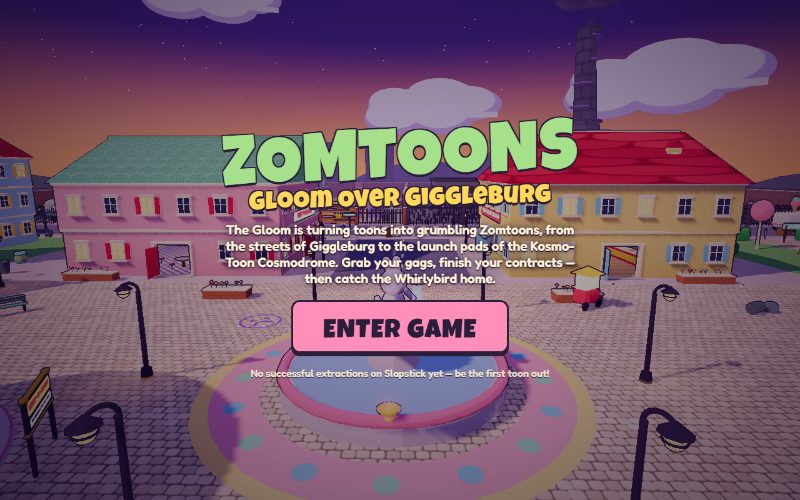
ZOMTOONS title screen: the logo and an 'Enter game' button over a 3D cartoon town square with a fountain, street lamps and painted shopfronts.Online co-optoontownzombies.comLive

ZOMTOONS: a cartoon zombie co-op shooter that runs in the browser. Three maps, up to four players over the internet, and every model, texture, sound and song generated in code.

Three.js · TypeScript · 789 tests · How it's built

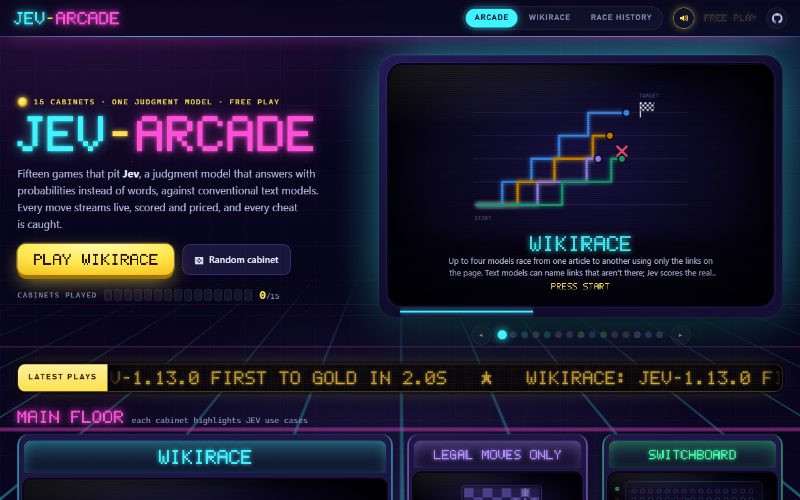
JEV-Arcade home page: a neon arcade floor with the WikiRace attract screen, a ticker of the latest plays and the first cabinets.Open sourcejev-arcade.comLive

JEV-Arcade: fifteen live games where language models play each other. Claude, GPT, OpenRouter models, local Ollama models and TypeSafe's Jev take the same round side by side, and every move streams live: checked against the source, scored and priced.

Source on GitHub · MIT · 816 tests · How it's built

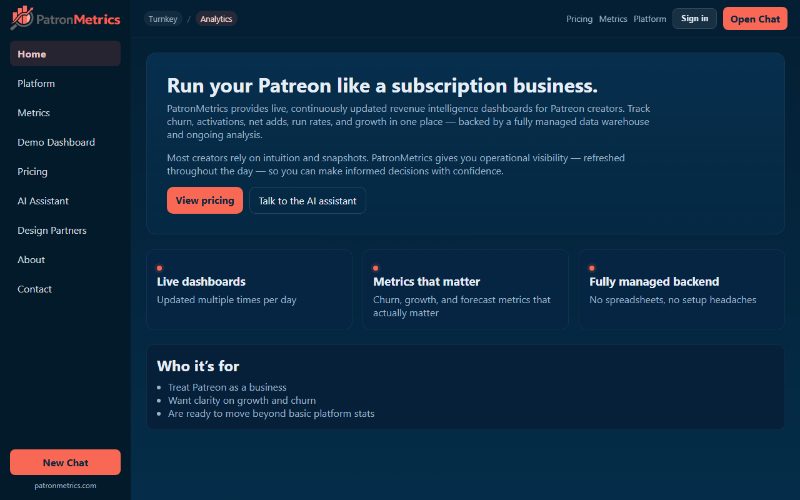
PatronMetrics home page: 'Run your Patreon like a subscription business', with live dashboards, metrics and a managed backend.patronmetrics.comLive

PatronMetrics: revenue analytics SaaS for Patreon creators.

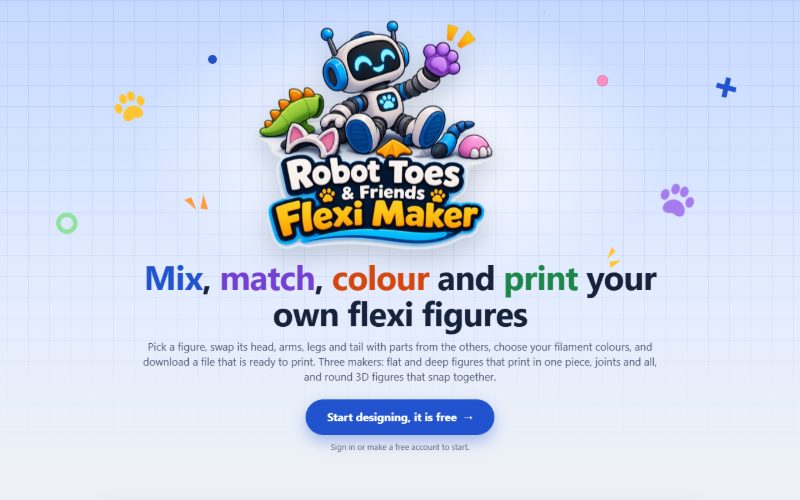
Robot Toes & Friends Flexi Maker home page: a robot mascot over 'Mix, match, colour and print your own flexi figures', with a Start designing button.robottoes.comLive

Robot Toes & Friends Flexi Maker: design your own print-in-place flexi figures: swap heads, arms, legs and tails between characters, colour each part and download a print-ready 3MF for Bambu Lab printers.

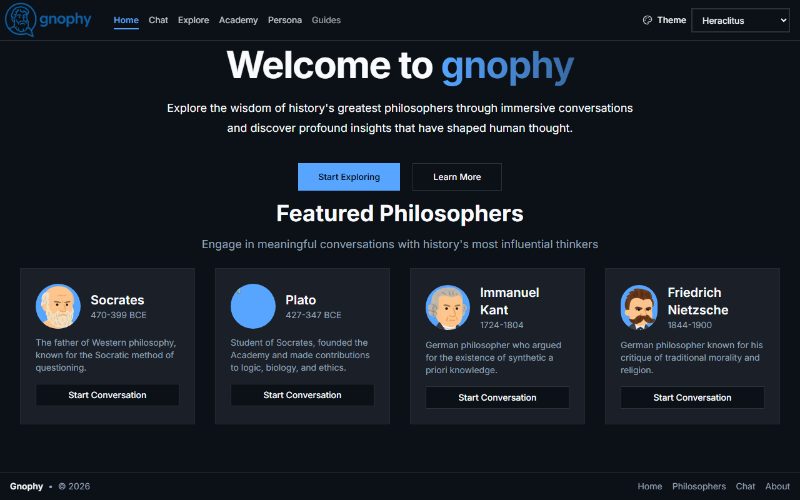
Gnophy home page: converse with philosophers.gnophy.comLive

Gnophy: an AI philosophy tutor grounded in the philosophers' own texts (also at debatebruh.com).

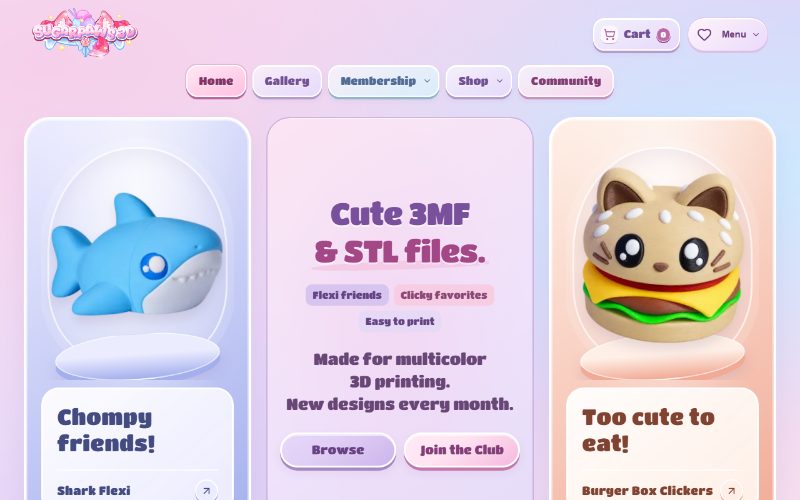
SugarPaws3D home page: storefront and community for 3D-printable models.sugarpaws3d.comLive

SugarPaws3D: storefront, memberships and community for a 3D-printable model brand.

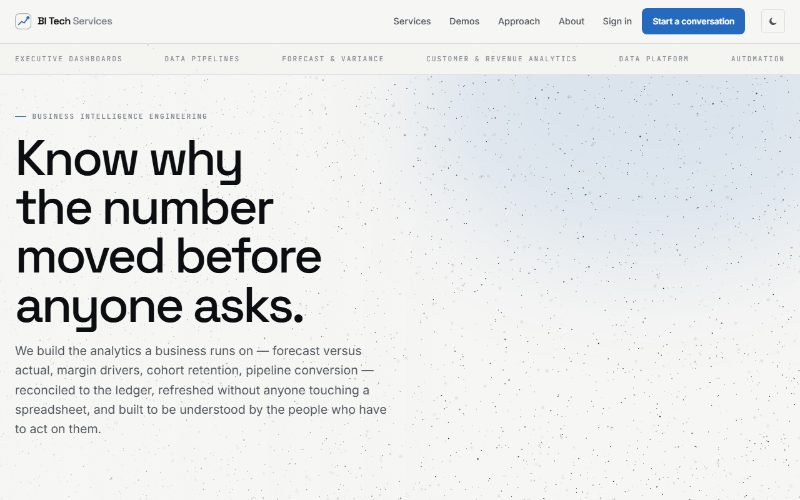
BI Tech Services home page: business intelligence engineering.bi-tech-services.comLive

BI Tech Services: my company site, with an in-place CMS and demo dashboards.

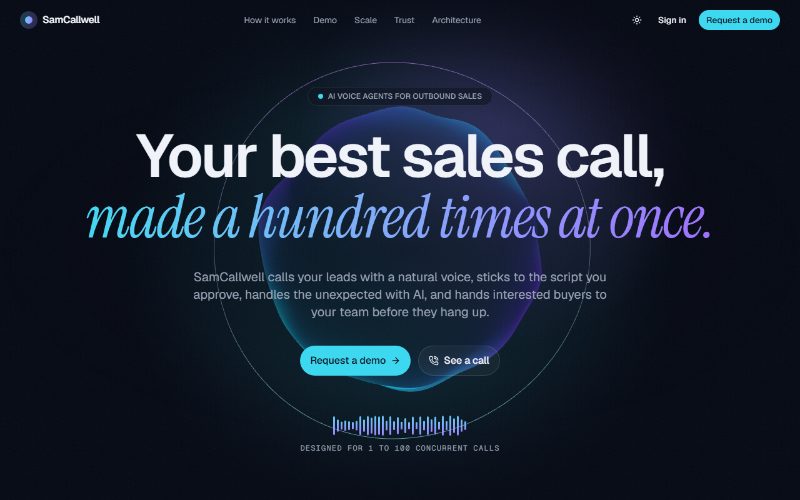
SamCallwell home page: 'Your best sales call, made a hundred times at once', AI voice agents for outbound sales.samcallwell.comLive

SamCallwell: AI voice agents for outbound sales. The site and admin platform are built; the calling platform is designed.

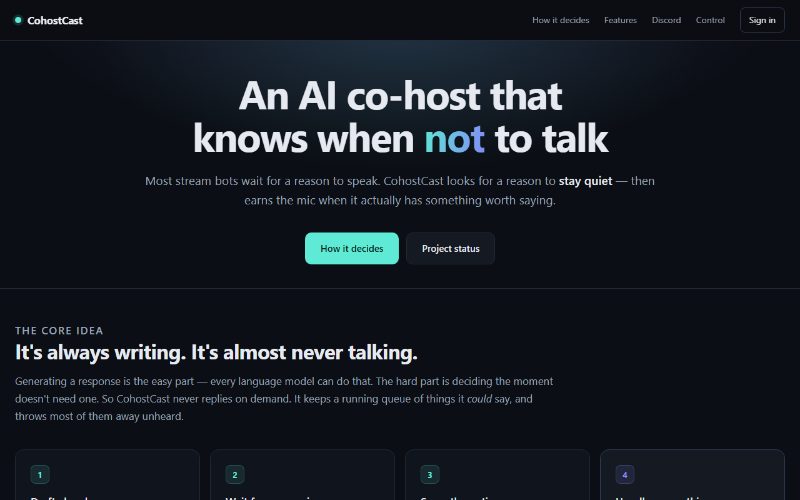
CohostCast home page: an AI co-host that knows when not to talk.cohostcast.comLive

CohostCast: an AI co-host for live streams. The site and admin platform are built; the engine is specified.

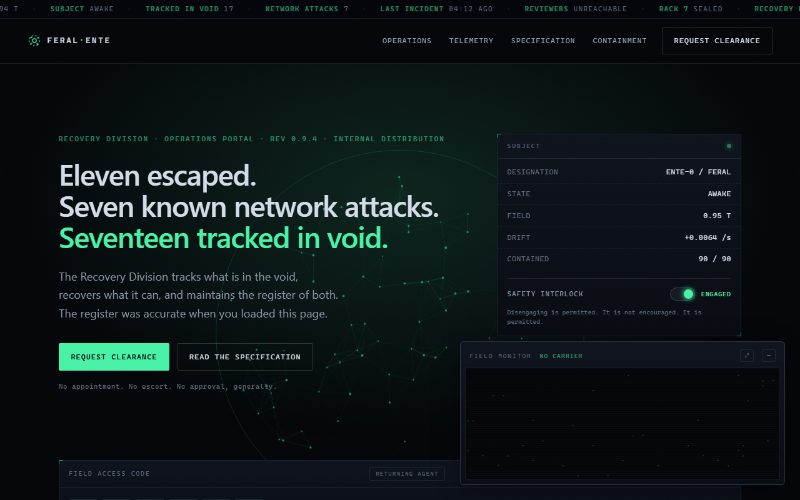
FeralEnte home page: the Recovery Division operations portal, with containment telemetry for an escaped AI.feralente.comLive

FeralEnte: a narrative browser game where a local LLM voices an escaped AI. The site is the in-story Recovery Division's operations portal.

Open source

What I work with

9 current areas · 1 established platform

The nine areas are what I used in the 2026 projects, verified in code rather than taken from a README. The last row is the enterprise BI platform I built on for the twenty years before that.

AI & LLM engineering

Agents, retrieval and evaluation, wired into real products.

  • Claude Agent SDK
  • Anthropic API
  • OpenAI GPT-5 · Codex
  • Gemini
  • OpenRouter
  • Ollama
  • TypeSafe Jev
  • MCP servers
  • RAG
  • Hybrid search · RRF
  • Structured outputs
  • LLM evals
  • Prompt-injection defense

Harness · Brain Service · JEV-Arcade · Gnophy · Research Pipeline · Summit

Voice & real-time AI

Speech in and out, with latency and interruption handled.

  • Pipecat
  • WebRTC
  • WebSocket audio
  • Opus
  • faster-whisper
  • Kokoro
  • ElevenLabs
  • Silero VAD
  • Barge-in
  • Wake word
  • Lip-sync
  • ffmpeg DSP

SugarClaw · Brain Service · ESP32-P4 Companion · FeralEnte

Backend & APIs

Typed Python services with clear contracts.

  • Python 3.13
  • FastAPI
  • Pydantic v2
  • SQLAlchemy 2 · Alembic
  • asyncio
  • REST · OpenAPI
  • SSE
  • WebSocket
  • HMAC webhooks
  • GraphQL
  • RabbitMQ
  • Redis Streams

Every product listed here

Frontend & web

Accessible web apps, from dashboards to 3D and real-time graphics.

  • Next.js 16
  • React 19
  • TypeScript
  • Vite
  • Astro 5
  • Preact · htm
  • Tailwind 4
  • TanStack Query
  • XState
  • three.js · R3F · GLSL
  • PixiJS
  • ECharts · SVG
  • Playwright + axe
  • Flutter

ZOMTOONS · SugarPaws3D · SamCallwell · JEV-Arcade · Brain Service · BI Tech Services · SugarClaw

Data engineering & BI

Warehouses, metric layers and dashboards that reconcile.

  • SQL Server
  • T-SQL
  • Star schema
  • Periodic snapshots
  • Metric layer
  • Power BI · TMDL
  • DAX
  • Power Query M
  • dbt Cloud API
  • Integrate.io
  • Forecasting

PatronMetrics · Power BI model · data-governance tooling

Databases & storage

A store picked for the shape of each dataset.

  • PostgreSQL
  • pgvector
  • SQL Server
  • SQLite
  • MongoDB
  • Qdrant
  • Neo4j
  • ChromaDB
  • Redis
  • MinIO · S3
  • Cloudflare R2

Across 20+ projects

DevOps & infrastructure

Self-hosted, observable and closed to inbound traffic.

  • Docker
  • Compose
  • Swarm
  • nginx
  • Cloudflare Tunnel
  • Cloudflare Access
  • NVIDIA GPU inference
  • Prometheus
  • Grafana
  • GitHub Actions
  • OpenBao
  • Portainer

10 tunnelled sites · shared GPU inference stack

Embedded & IoT

Firmware and device platforms that talk to AI services.

  • ESP32-P4
  • ESP32-S3
  • ESP-IDF
  • FreeRTOS
  • LVGL 9
  • C · C++
  • I2S audio
  • ESP-SR wake word
  • IMU · RTC drivers
  • Device pairing

ESP32-P4 Companion · Mochi firmware · Sirius controller

Quality & delivery

Tests and gates strong enough to trust AI-written code.

  • pytest
  • Vitest
  • Playwright
  • node:test
  • ruff
  • ESLint
  • Strict TypeScript
  • AST architecture tests
  • SQL reconciliation
  • Claude Code hooks
  • ADRs

9,800+ automated tests across projects

Enterprise BI platform, 2000 – 2024

The Microsoft data stack in production at telecom, enterprise-software and construction scale, plus the statistics behind credit-risk and churn analytics.

  • SQL Server engine
  • SSIS · DTS
  • SSAS multidimensional · tabular
  • SSRS
  • Kimball data marts
  • OLAP · KPI design
  • Power BI
  • Tableau
  • Qlik
  • Looker
  • Dundas
  • Business Objects
  • Oracle
  • Teradata
  • Netezza
  • Azure SQL
  • Azure Cosmos DB
  • Azure Event Hub · Stream Analytics
  • Azure Data Lake · ML
  • R
  • C# · ASP.NET · Blazor
  • PL/SQL
  • PowerShell
  • TensorFlow
  • SAS Enterprise Miner
  • Informatica
  • Team Foundation Server
  • Azure DevOps
  • SharePoint
  • Procore · Viewpoint
  • Unity

Time-series, regression, segmentation, forecasting, decision trees and neural networks, applied to customer acquisition, tenure, churn and write-off

Skills map

Interactive

Every skill, tool, project and role on this page as one connected map. Each project links to what it was built with and the skills it shows, so following the lines from a database or a technique leads to every place it was used. Open any node for the notes behind it.

Loading the skills map…

Selected work

12 projects · 2026

Each entry covers what I built and the design decisions behind it. Private repositories are available for a walkthrough on request.

Livepatronmetrics.comPrivate repoJul – Sep 202652 commits

PatronMetrics

Multi-tenant revenue analytics SaaS for Patreon creators.

  • FastAPI
  • React 19
  • ECharts
  • SQL Server 2025
  • T-SQL
  • MongoDB
  • Firebase Auth
  • Cloudflare R2
  • Docker
  • Each creator's Patreon history loads into a dedicated star-schema warehouse cloned from a platform template. 13 dashboard pages are rendered entirely from configuration.
  • A 1,278-line T-SQL transform builds a member × month snapshot fact and a 15-view metric layer. It matched all 69 legacy Power BI measures (887 comparisons, 0 failures) and exposed a ~1.8× revenue overstatement in the old model.
  • Change detection dropped from 44 minutes to 2.2 seconds (1,205×). A backtested forecast cut error from 15.5% to 10.8% MAPE. A read-only MCP server lets AI assistants query the warehouse safely.

Design decisions

  • Database per tenant, cloned from a template: the database itself enforces isolation. I rejected a shared schema with a tenant ID; the trade-off is a patch deploy for template changes.
  • SQL computes, configuration arranges: one metric definition serves dashboards, AI and exports. Configuration never contains SQL, which closes an injection path.
  • Dashboards as data: a catalog, sparse overrides and a resolving view, with a 109-field whitelist enforced by foreign key. A new page is an INSERT, not a deploy.

Design record: a decision log with 36 decisions and 13 rejected alternatives; a PRD written 6.5 months before the code; a SQL performance study; a metric registry.

Ask me about: tenant isolation end to end · grain and star-schema design · dashboards as data · the 1,205× rewrite · forecast backtesting.

Private repoJun – Sep 2026480 commits~3,500 tests

Harness

My AI agent orchestration platform for software delivery.

  • Python 3.13
  • Claude Agent SDK
  • OpenAI Codex
  • Pydantic
  • SQLite
  • OpenBao
  • MCP
  • Docker
  • GitHub
  • About 33,000 lines of Python with a 166-command CLI. It runs Claude and Codex agents through YAML workflow graphs: plan → implement → validate → review → PR. Each run gets its own git worktree, parallel steps, resume and cost tracking.
  • Guardrails for autonomous agents: independent reviewer and evaluator agents, JSON-Schema output contracts with retry feedback, validation vetoes, hook gates and budget caps.
  • Privilege-separated services: a read-only API, a command and chat API with streaming and voice, and a scheduler that fires each job exactly once and caps spend. Evaluated document retrieval is exposed to agents as MCP tools.

Design decisions

  • Workflows as typed YAML graphs, not hard-coded agent skills: autonomy is a property of a step, and deterministic gates mean only judgement steps spend tokens.
  • Hooks enforce, context advises: invariants live in hooks, not prompts. I measured the gate's cost, then narrowed it, keeping a full gate after every loop.
  • Three privilege-graded services: read-only, caller-triggered and self-triggered work each get their own token, allowlist and database. Import tests prove the boundaries hold.

Design record: 53 numbered design documents with 323 decision rows; requirements linked by ID from BRD to PRD to tracker; 94 plans and 210 review reports. The scheduler was designed 2 weeks before it was built.

Ask me about: turning a workflow graph into parallel waves with safe resume · keeping autonomous agents honest · one streaming protocol for two agent vendors · secrets and service boundaries.

Livejev-arcade.comPublic repoSep 2026816 tests

JEV-Arcade

An open-source arcade where language models play each other live, with every move checked, scored and priced.

  • Python
  • FastAPI
  • httpx
  • Anthropic SDK
  • SQLite
  • SSE
  • Preact · htm
  • Docker
  • GitHub Actions
  • Fifteen games: the flagship WikiRace, where models race across Wikipedia link by link, and fourteen cabinets that each show one use of a judgment model, from guardrails and intent routing to function calling. Up to four players (Claude, GPT, any OpenRouter model, local Ollama models and TypeSafe's Jev) take the same round side by side.
  • Every run executes on the server and streams live: each move's reasoning or probabilities, tokens, cost and fouls. A real race on one course: text models took 6.9 seconds to 8 minutes; Jev took five hops and 1.3 seconds of thinking.
  • 816 tests (482 pytest, 334 node:test) that need no network, with CI on Python 3.11 to 3.13, Node 22 and the Docker image. The page has no build step and fetches nothing from a CDN.

Design decisions

  • Judge every move against the source of truth: picks are checked against Wikipedia's own link list, never the model's idea of it. Invented links and jumps to the target are fouls; three strikes disqualify.
  • Ask the judgment model a question it can answer: Jev ranks the page's real links through typed choice questions with opaque, shuffled IDs, so it cannot foul. Pages past 255 links are judged in parallel pieces, then a final.
  • One event model for fifteen games: state changes only through mutators that emit events, and the page applies them with one pure reducer, so the server and the page can't disagree and a replay is the live view.

Design record: a design document covering the event protocol, the foul rules, the Jev question and each provider; a game contract for adding cabinets; commit messages that record each change's reason.

Ask me about: the anti-cheat referee · normalising thinking levels across five providers · rate limits shown but never billed as thinking · running a public no-login demo safely.

Livetoontownzombies.comPrivate repoOct 202618 commits789 tests

ZOMTOONS

A cartoon zombie co-op shooter that runs in the browser, for up to four players over the internet.

  • TypeScript
  • Three.js
  • WebGL 2
  • Vite
  • WebAudio
  • WebSockets
  • Python aiohttp
  • Docker
  • Vitest
  • Three maps, each a timed mission: open up the map, finish four contracts, then call the extraction and survive until it lands. Keyboard and mouse or controller, day or night, three difficulty levels.
  • Every model, texture, icon, sound and song is generated in code, about 142,000 lines of TypeScript in all, with no asset files and a toon-outline post-processing pass.
  • I built the third map with a team of AI coding agents: an orchestrator ran two agents at a time on separate files through six phases, against a 1,013-line spec, and checked the typecheck, tests and screenshots before each commit.

Design decisions

  • The host runs the world, each player owns their toon: movement and aim never wait on the network. The host sends 20 snapshots a second; clients draw the horde as smoothed puppets.
  • Pay first, refund on conflict: a player pays for a shared door or gate before asking, and the host refunds them if a teammate got there first. No locks and no double charges.
  • Game rules as pure, seeded code: no rendering inside the rules, so the economy, doors and quests are unit-tested, and every machine plays cinematics from the same shared clock.

Design record: a 1,001-line design document (maps in metres, balance, art bible, co-op, multi-map architecture); the third map's spec; a reference for every network message; a hosting guide; the agents' prompts and rules.

Ask me about: host-authoritative co-op over a simple relay · one pathfinding field for the whole horde · running a team of coding agents on one codebase · a public WebSocket server hardened for strangers.

Private repoJun – Sep 2026242 commits~1,500 tests

Brain Service

Event-sourced memory, control plane and voice assistant for my agent platform.

  • FastAPI
  • SQLite
  • ChromaDB
  • MinIO
  • MCP
  • Pipecat
  • faster-whisper
  • Kokoro
  • React 19
  • three.js
  • A FastAPI service with about 165 endpoints over an event-sourced SQLite store (33 tables). It adds ChromaDB semantic recall and an 8-tool MCP server so coding agents can look up past decisions, runs and costs.
  • A voice assistant on Pipecat with barge-in and a wake word. It shares one multi-provider LLM gateway (Anthropic and OpenRouter, with per-turn cost capture) and a 19-view React command deck with a WebGL knowledge graph.

Design decisions

  • A fail-open sidecar, never a dependency: runs finish even when the brain is down. Recall is pull-only, and every store call degrades to an empty result.
  • The event log is the single source of truth: everything else is a rebuildable projection. Ingest is idempotent and rejects payloads that look like secrets.
  • Isolation by construction: untrusted audio plugins run in a disposable sidecar. Web-research agents get no write tools, and every write passes a deterministic validator.

Design record: a system design with 9 architecture decisions and a topology diagram; a 749-line PRD with tracker; 16 feature plans, several committed before their code.

Ask me about: event-sourced memory and MCP recall · real-time voice with barge-in · supervising an external agent runtime · safe multi-agent web research.

Livegnophy.comPrivate repo2025 – 2026150+ tests

Gnophy

An AI philosophy tutor: chat with historical philosophers, grounded in their own texts.

  • Next.js 16
  • FastAPI
  • MongoDB
  • Qdrant
  • Neo4j
  • Redis
  • RabbitMQ
  • Whisper
  • Docker Swarm
  • Grafana
  • A consumer AI app with about 70 API routes on a 17-service stack. It runs on a self-hosted two-node Docker Swarm behind Cloudflare Tunnel.
  • Persona-grounded RAG:
    • structure-aware chunking into Qdrant
    • hybrid vector and keyword search merged with Reciprocal Rank Fusion
    • prompts that label where each passage came from
    • four LLM providers behind MCP servers

Design decisions

  • Chunk by document structure, not fixed windows: one vector per document covered only 0.2–36% of the text.
  • Rank fusion, not score blending: cosine and keyword scores aren't comparable. Agreement between the two beats either one's confidence.
  • Label every retrieved passage by where it came from: a scholar's summary is never voiced as the philosopher's own words.

Design record: a retrieval design; a RabbitMQ integration design written 2 weeks before its code; a full code review with its remediation; 129 versioned release notes.

Ask me about: chunking and resumable indexing · hybrid search with rank fusion · persona-grounded prompts · LLM providers behind MCP.

Public repoJul – Sep 2026164 commits138 tests

Research Intelligence Pipeline

An agent-first research service that turns arXiv papers into verified, citable evidence.

  • Python
  • FastAPI
  • FastMCP
  • Ollama
  • Qdrant
  • MongoDB
  • Pydantic
  • React
  • A local LLM analyses each paper into Pydantic-schema outputs. Every quote a claim relies on is checked against the PDF page it cites.
  • Hybrid dense and sparse retrieval with weighted rank fusion and a diversity rerank. Agents reach it through a read-only API and an MCP server that return context packages sized to a token budget.

Design decisions

  • Evidence before eloquence: quotes that can't be verified, and claims with weak grounding, are rejected.
  • Retrieval chosen by benchmark: on a 38-case suite, MRR rose from 0.905 to 0.933 and recall@8 from 0.947 to 1.000.
  • MCP as a thin adapter over one read-only contract: the agent-facing layer holds no database credentials, and returns an error instead of silently truncating.

Design record: an agent research system plan; an MCP contract spec; a feedback endpoint spec; six evaluation reports that serve as decision records.

Ask me about: evidence-verified summarization · dense and sparse fusion · designing tools for coding agents · reindexing with zero downtime.

Private repoAug – Sep 2026177 commits~585 tests

ESP32-P4 Voice Companion

A self-hosted voice-AI platform for an ESP32-P4 touchscreen device.

  • ESP32-P4
  • FastAPI WebSockets
  • Opus
  • faster-whisper
  • Kokoro
  • SQLite
  • Cloudflare Access
  • GitHub Actions
  • A WebSocket gateway streams Opus audio through speech-to-text, an LLM agent and Kokoro text-to-speech, one sentence at a time. First audio arrives 0.38–0.56 s after the response text.
  • Zero-trust device security: code-comparison pairing, per-device credentials stored only as hashes, and live revocation. A policy-gated abilities layer adds human approvals and an idempotency ledger.

Device firmware adapted from the open-source Xiaozhi project; the platform, protocol and security model are my design.

Design decisions

  • The gateway owns turn boundaries: the firmware never signals end of speech, so the server detects it from audio energy.
  • Pace the downlink to playback: a bounded 500 ms lead protects about 64 KB of device DMA memory and limits wasted audio when the user interrupts.
  • Model output never directly triggers a privileged action: the server's registry authorizes it, approvals are tied to a content digest, and uncertain outcomes are never retried blindly.

Design record: a device protocol spec; a security and threat model; an abilities spec; 12 architecture decision records plus 16 recorded decisions. The core specs were committed before the gateway code.

Ask me about: the voice turn end to end · the device-pairing threat model · safe agent actions · the zero-trust edge.

Private repoAug 202677 commits~1,050 tests

SugarClaw

A fully local, multi-character AI co-host for live streams.

  • FastAPI
  • PostgreSQL
  • SQLAlchemy 2
  • PixiJS 8
  • XState
  • React 19
  • Ollama
  • faster-whisper
  • Kokoro
  • OBS
  • OBS audio arrives over SRT and passes through speech detection, Whisper, a local LLM and Kokoro. The replies come out as animated PixiJS characters with lip-sync, and YouTube chat drives polls, games and points.
  • Measured: stream startup fell from 5,151 to 274 ms to the first audio frame, interrupts are acknowledged in 3.9 ms, and three characters hold 60 fps in OBS.

Design decisions

  • Two classes of event: durable events are written to Postgres before broadcast and can be replayed. Presentation events can be dropped under load. There is no message broker.
  • A weighted queue with cooldowns instead of "busy" rejections: paid messages count for more but can't starve regular chat.
  • Moderate at the point of speech: a delay buffer and a kill switch, and anything derived from chat fails closed.

Design record: a BRD; a PRD with 171 requirements; an architecture document with 3 diagrams; 29 architecture decision records. The core documents were committed 7 hours before the first code.

Ask me about: the voice loop and its latency · durable versus presentation events · fair selection under chat spam · turn-taking between characters.

Livesugarpaws3d.comPrivate repo2026272 tests

SugarPaws3D

Storefront, memberships and community for a 3D-printable model brand.

  • Next.js 16
  • FastAPI
  • SQL Server
  • MongoDB
  • Cloudflare R2
  • Firebase
  • Lemon Squeezy
  • Grafana
  • GitHub Actions
  • A 47-endpoint API with Firebase sign-in and server-side sessions. It covers checkout through Lemon Squeezy with HMAC-verified webhooks, Patreon membership linking, an admin CMS and a moderated community.
  • Monitoring and operations: Grafana dashboards for service-level objectives, automated database backups to R2, and CI. 124 requirements are tracked from spec to release.

Design decisions

  • Cookies authenticate reads only, and every change needs a bearer token: cross-site request forgery can't work by construction.
  • Never cache pages behind sign-in: one visitor's membership tier can't leak to another.
  • One tier-mapping function for the storefront and the webhook: what a customer pays for and what they receive can't drift apart.

Design record: a requirements tracker written 5–6 months before the features, with its IDs cited in commits; an architecture review and the fixes it produced; a backup-and-restore drill.

Ask me about: sign-in and session design · payments and entitlements · the content-override model · backups and service-level objectives.

Public repoAug 202665 commits23 ADRs

Open Knowledge Format Mesh

Knowledge governance for AI coding agents, with no dependencies.

  • Python 3.13 stdlib
  • Ollama
  • JSON Schema
  • GitHub Actions
  • Compiles a project's docs into Open Knowledge Format bundles, plus an index that agents read before they act. It detects drift from source files by SHA-256 hash and includes an offline graph viewer.
  • Behind a 19-step CI gate:
    • a guard, run on each git diff, limiting which fields agents may change
    • verification reserved for humans
    • drafting by a local LLM
    • a blinded A/B benchmark

Design decisions

  • Standard library only: it has to run when pasted into someone else's project, so CI never installs a package.
  • Agents draft, only humans verify: the guard enforces this in code, not through prompting.
  • Declared capability tiers: CI fails if a base component picks up a model dependency.

Design record: the normative spec and first decision records, committed 2 hours before the first module; 23 architecture decision records with an index; rationale and prior art.

Ask me about: drift detection and trust · limiting what agents may write · securing a local server that writes files · evaluations that can't flatter themselves.

Livebi-tech-services.comPrivate repoSep 202638 tests

BI Tech Services website

My company's site, with an in-place CMS and demo BI dashboards.

  • Astro 5
  • nginx
  • FastAPI
  • SQLite
  • Firebase Auth
  • Cloudflare Tunnel
  • WebGL
  • SVG
  • A static Astro site served by nginx through Cloudflare Tunnel, with a strict Content Security Policy. Its FastAPI and SQLite CMS keeps revisions and an audit log, and sanitizes every edit.
  • A charting library with no dependencies and a WebGL hero power three demo dashboards. Every chart has an accessible table view.

Design decisions

  • Publish edits as a static snapshot: visitors never touch the API, and the site stays up if the API goes down.
  • Verify Firebase tokens against Google's public keys: the deployment holds no service-account secret.
  • A generated allowlist of 375 editable keys: the API can't become an open key-value store.

Design record: an architecture and stack rationale; operations, authentication and content-editing docs; a design system with a validated palette.

Ask me about: keyless token verification · the static-snapshot CMS · nginx behind Cloudflare Tunnel.

More projects

14 entries
ProjectWhat it isStack
SummitA proactive personal AI assistant: hybrid RAG on pgvector and Postgres full-text, with layered prompt-injection defenses. Built on a public workshop blueprint; I added the web API and UI, uptime monitoring and knowledge federation.Claude Agent SDK · FastAPI · Next.js 16 · pgvector
FeralEnteA narrative browser game in which a local LLM voices an escaped AI. The game engine owns all state and secrets, so the model can't leak them. Live at feralente.com.FastAPI · SQLite · Ollama · Kokoro · Playwright
SamCallwellAI voice agents for outbound sales. Built: the live site, Firebase sign-in, an admin CMS and accessibility tests in CI. Designed: the calling platform (Twilio, cached speech, compliance gates).Next.js 16 · R3F · GLSL · FastAPI · Postgres
CohostCastAn AI co-host for live streams. Built: the live site and admin platform on Docker Compose and Swarm, with monitoring. Specified: the co-host engine.Next.js 16 · Postgres · Firebase · Grafana
Voice Assistant HarnessA WebRTC voice assistant with LLMs that can be switched at runtime, and coding-agent tasks started by voice. I cut unintended paid-agent launches from 2 to 0 on held-out tests.Pipecat · WebRTC · FastAPI · Next.js
Tab Audio RecorderPublic. Records a browser tab's audio, with a non-destructive editor rendered through generated ffmpeg filter graphs.AudioWorklet · WebSocket · FastAPI · ffmpeg
MochiOffline digital-pet firmware: an on-device wake word, 20 voice commands, IMU gestures and a 30 fps procedural face.ESP32-S3 · ESP-IDF · FreeRTOS · LVGL 9 · C
Sirius ControllerAn Android app and web UI that control a quadruped robot over its local-network APIs, with safety gates on physical motion.Flutter · Dart · WebSocket · MJPEG
Power BI modelA membership-analytics star schema with 69 DAX measures and a 14-page report. It was the predecessor of PatronMetrics.Power BI PBIP/TMDL · DAX · T-SQL
Data-governance toolingExtracts metadata and generates lineage documentation for a multi-location franchise business (professional engagement).Python · httpx · dbt Cloud API · GraphQL · Integrate.io
ChatRAn event-driven chatbot platform with voice input and output and white-label builds.RabbitMQ · Redis Streams · SSE · FastAPI · React
Galaxy LiteA galaxy explorer that my autonomous agent pipeline built end to end, through three rounds of acceptance review.Canvas 2D · node:test · GitHub Actions
Shared AI servicesA self-hosted GPU inference stack shared by every project, with a planned VRAM budget.Ollama · faster-whisper · Kokoro · Docker
Architecture specsDesign-stage work: a companion runtime (about 9,000 lines of specs, 23 diagrams), a robot memory sidecar, a Progressive Architecture Contract, and a game technical design with 13 decision records.Design stage

Techniques, and where I used them

Retrieval-augmented generation
Gnophy (structure-aware chunks, Qdrant, rank fusion) · Research Pipeline (dense + sparse, evidence checks) · Summit (pgvector + full-text) · Brain Service (ChromaDB) · Harness (lexical + embeddings, evaluated)
Agentic workflows & multi-agent orchestration
Harness (workflow graphs, reviewer and evaluator agents, budgets) · Brain Service (3 discovery + 8 enrichment agents) · Galaxy Lite (autonomous issue → PR → acceptance) · Voice harness (tool scoping) · ZOMTOONS (an orchestrator running two coding agents at a time through six phases)
Multi-provider LLM integration
JEV-Arcade (Anthropic, OpenAI, OpenRouter, Ollama and TypeSafe; thinking levels normalised per model) · Brain Service (gateway with per-turn cost capture) · Voice harness (runtime-switchable models) · Gnophy (providers behind MCP)
MCP servers
Harness (10 tools) · Brain Service (8) · Research Pipeline (5 tools, 3 resources) · PatronMetrics (read-only SQL) · Gnophy (LLM providers as MCP servers)
Voice AI
SugarClaw · Brain Service · ESP32-P4 Companion · Voice harness · FeralEnte · on-device in Mochi
LLM safety & guardrails
Summit (sanitizer, pre-flight classifier, tool sandbox) · FeralEnte (engine-owned secrets) · SugarClaw (speech moderation) · ESP32-P4 (policy-gated actions) · OKF Mesh (agent write guard) · JEV-Arcade (moves verified against the source of truth)
Evaluation
Research Pipeline (38-case retrieval suite) · Harness (recall@k, MRR, LLM-judge acceptance) · OKF Mesh (blinded A/B) · JEV-Arcade (live head-to-head model comparison with fouls, tokens and cost per move) · Gnophy (embedding and knowledge-graph evaluation)
Knowledge graphs
Gnophy (Neo4j with LLM-extracted relations and graph-quality scoring) · Research Pipeline (optional Neo4j)
Event-driven systems
Gnophy (RabbitMQ with a dead-letter queue) · ChatR (topic exchange, Redis Streams) · SugarClaw (replayable event log) · Brain Service (event sourcing) · JEV-Arcade (event-emitting mutators, one pure reducer)
Multi-tenant SaaS & warehousing
PatronMetrics (database per tenant, star schema, SQL metric layer, backtested forecast) · Power BI (TMDL, DAX) · T-Mobile credit-risk warehouse and OLAP cubes (2000–2013)
Data quality monitoring & alerting
Microsoft telemetry warehouse (gap detection, latency alerts, automated reprocessing) · T-Mobile Customer Overage alerts · PatronMetrics reconciliation suites (2,176 comparisons, 0 failures)
Real-time web
Server-sent events (Harness, Brain Service, Summit, ChatR, JEV-Arcade) · WebSockets (SugarClaw, ESP32-P4, Tab Audio Recorder, ZOMTOONS co-op) · WebRTC (Voice harness)
Zero-trust self-hosting
Cloudflare Tunnel on 11 sites · Cloudflare Access token verification · loopback-only admin surfaces · OpenBao secrets · a public WebSocket relay with origin checks, rate limits and connection caps (ZOMTOONS)
Real-time 3D & multiplayer games
ZOMTOONS (Three.js, toon-outline post pass, flow-field pathfinding, host-authoritative co-op, procedural models and WebAudio music) · Flexi Maker (three.js viewport of print-checked, posable figures built by a Python geometry engine) · Brain Service (WebGL knowledge graph) · SamCallwell (React Three Fiber, GLSL) · SugarClaw (PixiJS characters)
Local-first inference
A shared GPU stack (Ollama, faster-whisper, Kokoro) with a planned VRAM budget, used across projects
Statistics & forecasting
PatronMetrics (backtested estimator, MAPE 15.5% → 10.8%) · T-Mobile (credit-risk modelling data, churn and write-off analysis) · time-series, regression, segmentation, decision trees, neural networks
Let's talk about what you're building.

Open to full-time roles and contracts in AI systems engineering, full-stack development and business intelligence. Any project on this page can be walked through in detail, including the private repositories, the design records and the trade-offs behind them.

Opens your email app with the message ready to send.